Transcript lightly edited for readability.
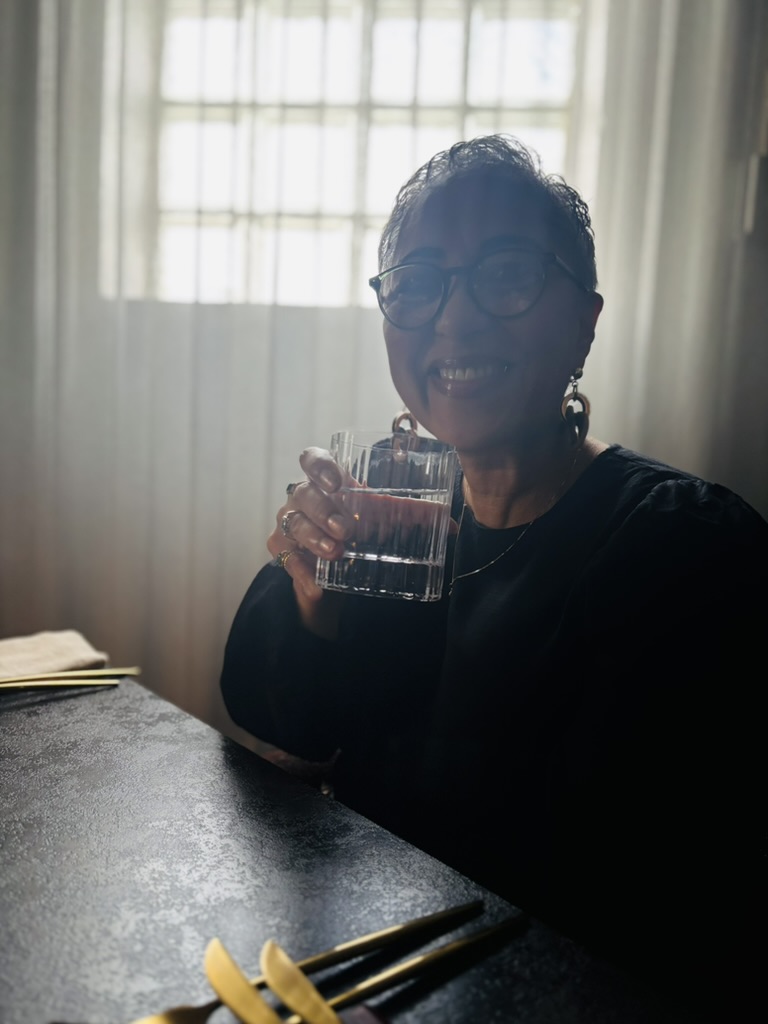
Teddy PHello, all you creative types out there — welcome to the CWA podcast, Collaboration With Artists, with your host, Teddy P. The podcast that interrogates works from budding writers with fresh stories to tell, who have recently become published. As we know, getting published is a big deal. Today we have a playwright who hails from South Africa but has lived in Australia for the majority of her life. Welcome, Nessa. It’s great to speak with you today about your play, Caged Light. The title alone is intriguing, so let’s start there.
Nessa CareyThank you so much for having me. It’s such a joy and a privilege to talk about this close-to-home project — close to my heart, close to my everything. The title is intriguing, but I’ll get to that a little later. First I need to set the scene, to give you some background so the play makes sense. Just imagine a dispossessed people, a group marginalised, who still maintain to some degree a continuing attachment to their land but aren’t able to engage with it. A people who had titles like princes and princesses — then everything was stripped away. The culture was vibrant and continuous, but stymied and oppressed by the politics of the country they called home, and yet abandoned by that same country: not white enough to be white, or black enough to be black. In between. Convenient and disposable. Forgotten, disenfranchised, on the periphery of everything. That is the story of Coloured people in South Africa under apartheid — and, unfortunately, beyond it too, living into the post-apartheid era. So that, in essence, is the backdrop — the historical and personal context that situates the play.
Teddy POf course — thank you. So why this title, and perhaps why at this stage of your life?
Nessa CareyThe title actually came later. I started writing almost as a memoir — vignettes about various incidents in my life: most ordinary, some outstanding, and some people would say even unbelievable. But while doing my Master’s in creative writing, I was inspired to try something different. I’m also an English teacher, keen on the performance side of stage drama — this idea of going from the page to the stage — so I was curious how my stories might become a living, breathing drama. So I thought, why not write a play? A challenging, daunting, overwhelming prospect, without a doubt. But I knew enough about stage drama to adapt my stories — to fictionalise them and build new characters around events from my actual life. The title only came to me after I’d written half the play. Here’s the irony in it: in my mind, a cage — reminiscent of the Doll’s House imagery, of Ibsen — a bird in a cage that can be released at any point, but doesn’t go. The light is a metaphor linked to the key character, Aisha. She is the beacon of light: she embraces the past and sets her sights on a new and impassioned future in Australia, where she takes charge of her academic career, her relationships, and her ultimate destiny. Her light had been caged in apartheid South Africa, and she carried that with her into her early life in Australia. That’s my reading of “Caged Light” — but it’s my hope, my dream, that people who see the play make their own meaning. They take the two words and ask, “What does this mean?” and interpret it as they will. Rather than me explaining, I think it’s prudent for people to watch the play, read the play, and interpret it for themselves.
Teddy PThank you for explaining. I think Edith Cowan University will appreciate your contribution to their academic literature — and it’s really helpful for our listeners to have that background. Can we move on to the writing process? You’ve confessed that your earlier drafts were a sprawling, episodic mess — six decades crammed into one script. What was the move that turned that pile of life events into a play?
Nessa CareyOh gosh — the humbling part is that it’s real. I actually teach drama; I teach the very stuff I was trying to recreate. The move was to stop covering and start patterning. Early on I tried to include everything, which gave me an episodic catalogue, not a drama. Then I noticed certain things kept recurring across my life: a charming man in both scenarios, a dangerous man in one, a car chase in both. Instead of treating those as separate incidents, I treated them as the same pattern repeating — because repetition exposes systemic violence in a way a tidy timeline never could. Patterns over chronology. And suddenly I discovered I wasn’t transcribing a life; I was building an argument with a shape.
Teddy PWow. It reminds me of how First Nations people talk about time as a circle rather than a straight line — that framework resonates deeply. You’ve also said that for a woman who has lived being categorised and silenced, writing this play is itself resistance — not just survival. What does it mean to you personally to pick up that pen and refuse to be silent?
Nessa CareyThat’s right. Silence is something we should move out of — as First Nations people are doing, becoming the voice now, articulating their sense of self. For my play, I referred to bell hooks, and what she called “talking back”: moving from silence into speech as a gesture of defiance that heals. For most of my life, the world told me who I was — it categorised me, contained me, decided what I was allowed to say. Writing this play is me taking that authority back. The final image is Aisha alone with her notebook, pen poised — because the pen is dangerous. It asserts the right to speak, to be heard, to shape your own story. This wasn’t therapy for me; it was testimony. A public act that says: I was here, this happened, and I get to decide what it means. There’s a profound freedom in that.
Teddy PGosh, I’m a bit lost for words — that’s quite vulnerable. Maybe moving on: you end the play with “I’ve always depended on the kindness of drafts.” I suspect that’s a direct riff on Blanche’s “kindness of strangers.” That’s either brilliant or, dare I say, audacious. Tell me you knew what you were doing.
Nessa CareyAbsolutely — it was deliberate. There’s an academic impulse to pretend we’re all original geniuses, but writers are essentially magpies: we steal, we borrow, we enhance, we play with what’s come before. The Blanche reference runs through the whole play — the opening, the middle, and the very last line, like a thread weaving throughout. It’s a cheeky note that says nothing is new under the sun; we’re all revising each other, and that’s okay. It’s not plagiarism — it’s literary DNA. Aisha, a teacher obsessed with Shakespeare and Williams, understands she’s using their language to understand her own life. So the final line is her reclaiming that language for herself. People go to the theatre, see the weaving of Tennessee Williams throughout, and it resonates with them.
Teddy PThat borrowing, which all writers do — myself included — leads to my next question, about revision: the going back in, in a more deliberate way. Ma, for instance, was barely there in your first draft, and then she became this guiding light. How did that transformation happen on the page, and what does it teach us about trusting the process of revision?
Nessa CareyThat’s a really good question. Process is important to me — any writer would say so. It happened through honest feedback and a willingness to dive back in. My course tutors pointed out that Ma was underdeveloped and could add another layer. In the first draft I’d paid only cursory attention to her, despite knowing she was instrumental in the way Aisha develops. So I returned to her and wrote a monologue that laid out her background and her motivation — for herself and for her daughter. In writing it, I discovered her: a woman wise beyond her limited education, who knew her daughter had to escape apartheid to realise her potential. She became the glue Aisha depends on for survival — in fact, the shining light in a bleak world. Ma taught me that revision isn’t just fixing mistakes; it’s discovery. Sometimes the most important character only reveals herself the second or third time through. Here’s an edited extract:
“I learned young that survival is a performance. You smile at the madam who pays you late. You nod at the man who calls you ‘girl’ when you’re forty-five. You save the rage for the kitchen, where only the pots can hear you scream. But that one — my Aisha — she’s different. She doesn’t swallow her words. She writes them down, files them like evidence. Sometimes I’m frightened by how much she sees. She looks at the street, this house, this life, and she doesn’t see shame — she sees stories worth telling. That’s dangerous. That’s necessary. When she was small, she’d ask me, ‘Ma, why do we live here?’ And I’d say, ‘Because this is where we landed.’ But what I meant was: because they drew the lines, and we weren’t allowed to cross them. Now she’s learning to draw the map — with words, with that dangerous pen of hers.”
That’s an example of Ma’s reflection on the Coloured people’s journey, and her intention to create space for Aisha to become what she could not. Ma is the conduit, the reason for Aisha’s escape. Placing her intimate moment with the audience near the beginning of the play became pivotal for engagement and for understanding both women. They become an interwoven essence of mother and daughter — doing this lovely dance, so in sync. That’s the power of the story between Ma and Aisha.
Teddy PThat’s powerful — thank you. I was fortunate enough to see some of those places in South Africa, the white spaces, the beachfront that’s been reclaimed. It’s a very moving and poetic allusion. Thanks for reading that part of Ma with such honesty — that can’t be easy. It seems the revisions worked in your favour, and Ma is a force to be reckoned with — a steady voice of reason amongst the chaos of the Wentworth backdrop, perhaps?
Nessa CareyAbsolutely. Ma is pivotal. Revising her character — and I’m so glad I did — was what was required for authenticity and legitimacy. That all happened in the revision. So revisions are paramount to a writer’s success, I think.
Teddy PThank you. Any final words about the play or the process — and when and where can we see it?
Nessa CareyThe best way is to get it at your local bookstore; I’m sure you’ll find the play there. As for the theatre, that’s in negotiation — we’re working on it. But honestly, if it comes close to you, please do me a favour and go and see it. It’s worth seeing — a slice of life within the South African apartheid era that’s really quite hidden and not often talked about. My play exposes all of that. So please, go and see it if you get the chance.
Teddy PThank you, Nessa — and thank you for drawing out that beautiful contradiction in such an authentic way. Everybody, thank you for tuning into the CWA podcast, where we promote new talent and expose you to things worth pursuing. Until next time — this is Teddy P, signing off.